
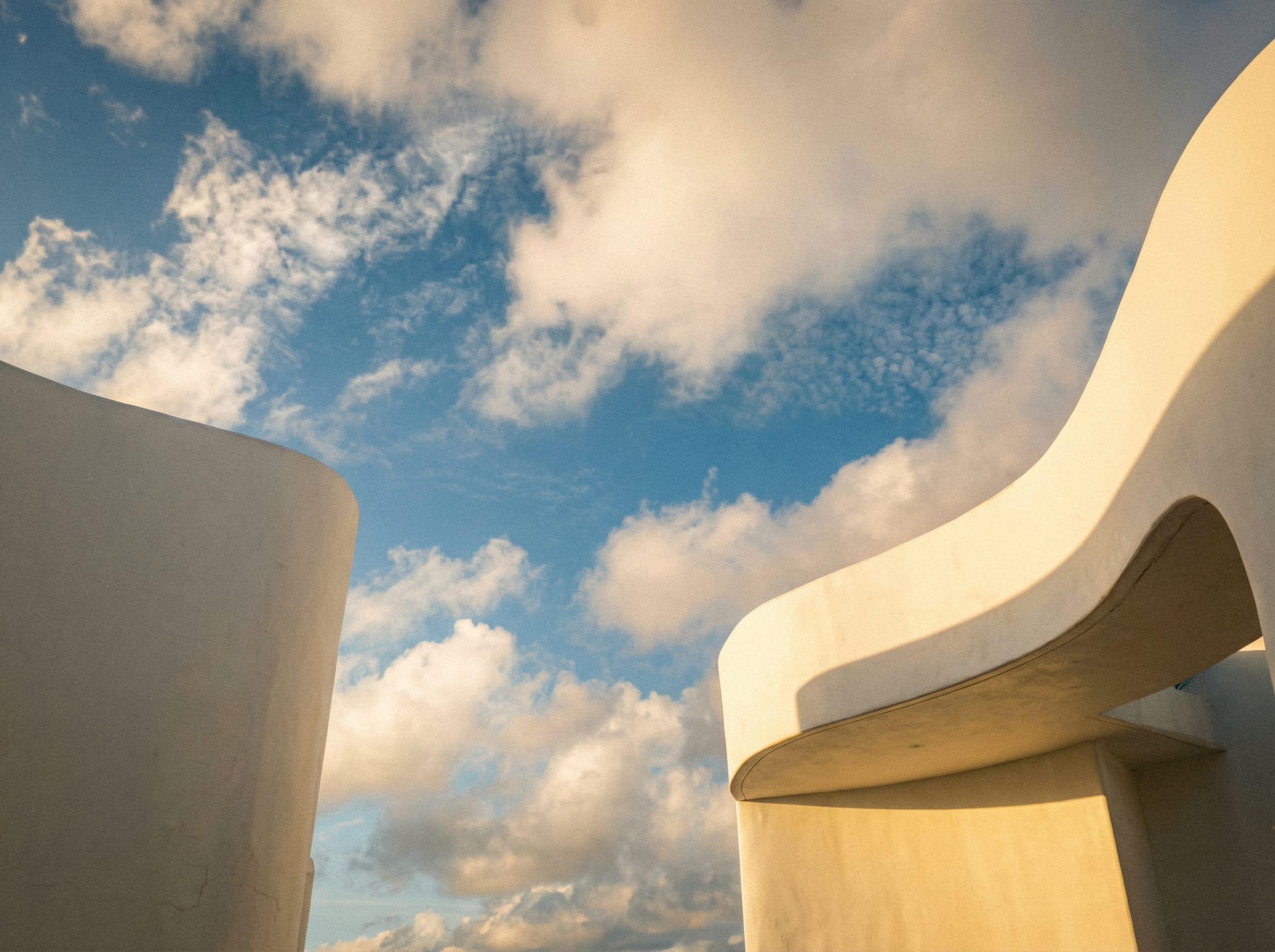
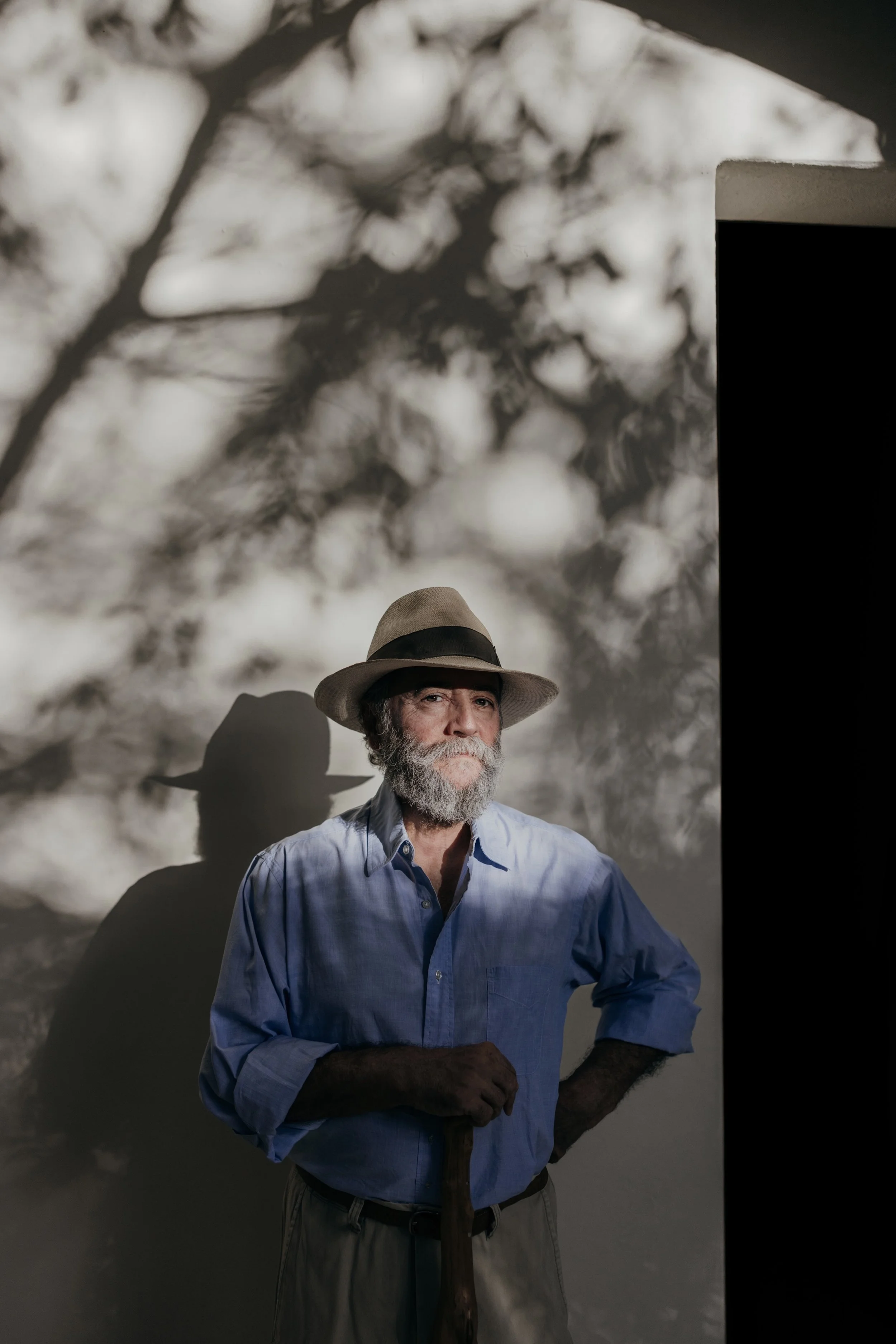
Ricardo de Romay is an architect celebrated for pioneering development along the then largely undiscovered Mayan Riviera — Playa del Carmen, Tulum, Bacalar — and for shaping the region’s distinctive architectural identity. Over the course of more than four decades, he has cultivated an organic style defined by ingenuity, eccentricity, sophistication, wit and charm — and, above all, by an enduring dialogue with nature. whose work is characterised by organic forms, regional context, and attention to craftsmanship. Ricardo de Romay has emerged as the progenitor of what has come to be described as Mayan Organic Vernacular — a contemporary architectural language rooted in ancestral craft, classical proportion, and the climatic intelligence of the Yucatán landscape.
His practice has been deeply informed by lessons drawn from eminent figures, family and friends, among them John Lautner, Geoffrey Bawa, Frank Lloyd Wright, Luis Barragán and Le Corbusier. This cosmopolitan network, combined with his own international family background, helped forge a singular aesthetic language. In parallel, Ricardo undertook an extensive exploration of Mexico’s indigenous architectural traditions, materials and communities — from adobe (sun-dried mud blocks) to Mayan palapas (thatched-roof houses) and chukum (stucco)— fusing these influences through experimentation and turning them into a new style at once rooted and innovative.