
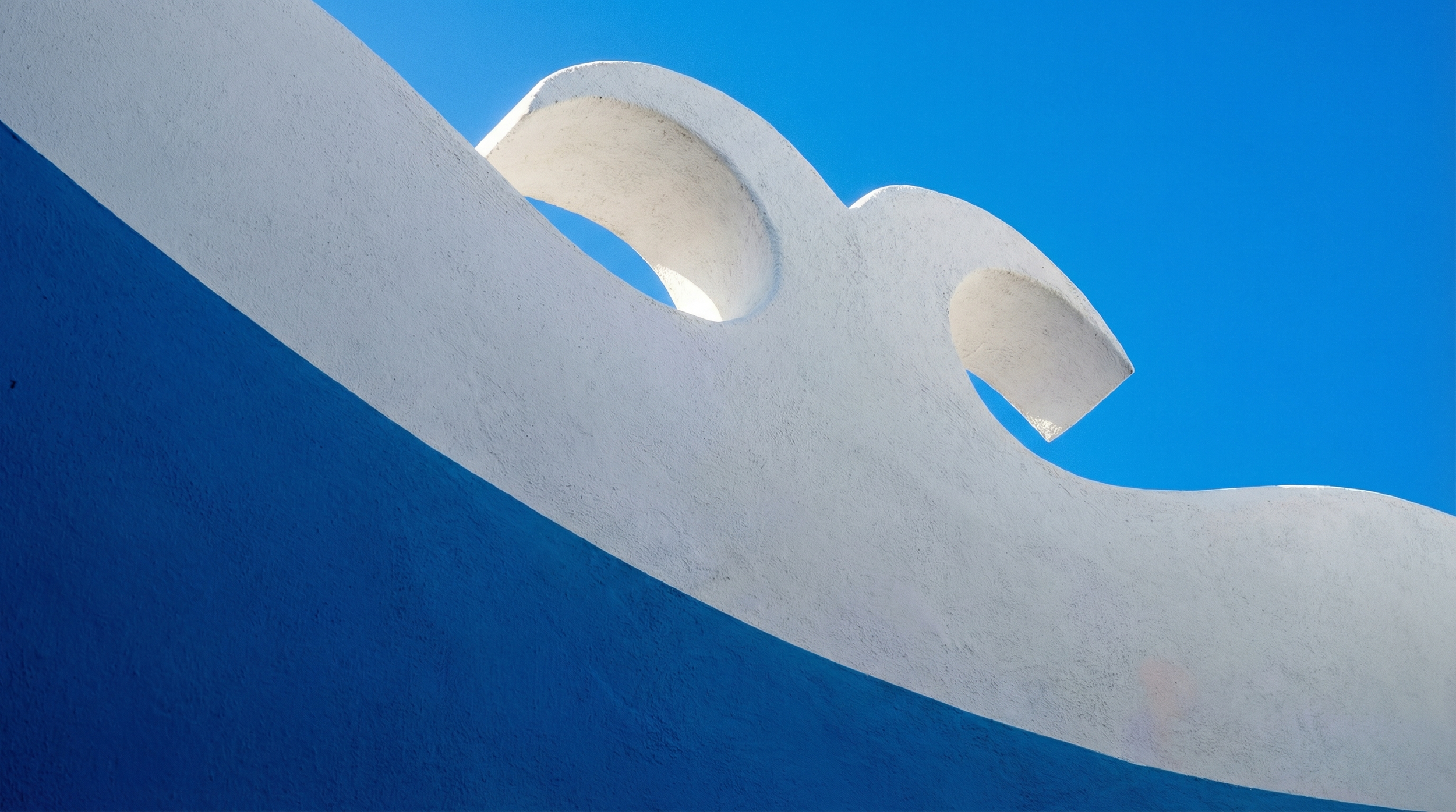
Ricardo de Romay’s practice is shaped by an ongoing conversation between landscape, culture, and form. Working primarily across southeastern Mexico, he has developed an approach often described as Mayan Organic Vernacular — an architectural language that draws from Mayan traditions, classical proportion, and the realities of tropical climate. His projects are conceived as experiences rather than objects, defined by framed views, courtyards, and a careful choreography of light, air, and movement that connects interior life to the surrounding environment.
Central to his work is a deep exploration of regional materials and ancestral techniques, reimagined for contemporary architecture through both academic research and hands-on experimentation with ancient building practices, including the study and recreation of natural pigment processes used to achieve the soft green and pink hues found on historic Mayan surfaces. De Romay collaborates closely with local artisans to work with quarried stone, and native hardwoods, reviving the use of mineral and earth-based pigments to produce subtle chromatic finishes that guide light and accentuate shadow. Elements such as continuous terraces, sculptural staircases, and hand-carved doors are transformed into architectural gestures that blur the line between structure and art. Through this synthesis of research, craft, and design, his work advances a modern vernacular—rooted in tradition, yet unmistakably of its time.